Conceptual Foundations of Ayurveda:
Saṃhitā & Siddhānta
Prof. (Dr.) Shailza Bhatnagar
M.D.(Ay.), Ph.D. (Ay.)
Specialization: Saṃhitā & Maulik Siddhānt

Conceptual Foundations of Ayurveda:
Saṃhitā & Siddhānta
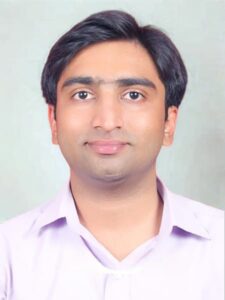
Dr. Nandeesh J.
M.D.(Ay.), Ph.D. (Ay.)
Specialization: Ayurveda Saṃhitā & Siddhānta
Conceptual Foundations of Ayurveda:
Saṃhitā & Siddhānta
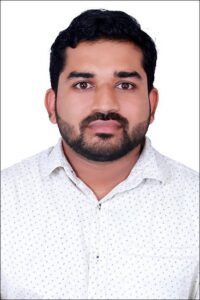
Dr. Nidhin P.S.
M.D.(Ay.)
Specialization: Ayurveda Saṃhitā & Siddhānta
Know Your Editors
Prof. (Dr.) Shailza Bhatnagar
Prof. (Dr.) Shailza Bhatnagar is a distinguished Ayurveda academician, researcher, and educator with extensive expertise in Ayurveda Samhita, Maulik Siddhanta, and Rasayana therapy. She completed her MD in Ayurveda Samhita from Banaras Hindu University and obtained her Ph.D. from the National Institute of Ayurveda under Dr. S. R. Rajasthan Ayurveda University, Jodhpur. Her doctoral research titled “A Critical and Comprehensive Study on Rasayana Therapy in Brihattrayi with special reference to ‘Sa bhāvanyaviśam cātra gātre sampadyate viśam’ (Caraka Saṃhitā)” critically analyzed classical Rasayana concepts and explored their relevance for disease prevention, rejuvenation, and longevity. Her work emphasizes the scientific interpretation of classical Ayurvedic texts and their application in contemporary healthcare contexts.
Prof. Shailza Bhatnagar currently serves as Professor in the Department of Samhita and Maulik Siddhant at the National Institute of Ayurveda (Deemed to be University), Jaipur. She has published around 45 research papers in SCOPUS, UGC-CARE, DOAJ, and peer-reviewed journals, contributing significantly to the fields of Ayurvedic classical concepts, lifestyle disorders, Rasayana therapy, and textual interpretation. She has authored academic books including “Padarth Vigyan Simplified – Textbook of Basic Principles” and “Paricharya ke Mool Siddhant”, designed to support Ayurveda students and scholars. In addition, she has delivered numerous invited lectures and participated in national and international conferences.
She actively contributes to academic administration, curriculum development, and research mentoring, guiding postgraduate and doctoral scholars. She also serves as Senior Editor of the International Journal of Ayurveda360 and reviewer for reputed journals such as Journal of Ayurveda and AYU. Her academic work reflects a strong commitment to preserving classical Ayurvedic wisdom while strengthening its research-based interpretation in modern academic discourse.
Dr. Nandeesh J.
Dr. Nandeesh J. is an Ayurveda scholar, researcher, educator, and digital innovator specializing in Ayurveda Samhita and Siddhanta. He holds BAMS from SDM College of Ayurveda, Udupi, where he graduated as college topper and received three university gold medals from Rajiv Gandhi University of Health Sciences. He completed his MD in Ayurveda Samhita and Siddhanta from the National Institute of Ayurveda, Jaipur as University Topper, and later earned his Ph.D. in the same discipline from the National Institute of Ayurveda (Deemed University), Jaipur.
His postgraduate research focused on Doshagati and its clinical implementation in Vatarakta and Kustha, while his doctoral research titled “Critical and Comparative Analysis of Commentaries on Kalpanācatuṣka in Caraka Saṃhitā” examined the interpretative traditions of classical Ayurvedic commentaries and their methodological relevance for contemporary scholarship.
Dr. Nandeesh currently serves as Associate Professor at the Mandsaur Institute of Ayurved Education and Research, Madhya Pradesh, where he teaches Samhita and Siddhanta and mentors research scholars. His academic interests include Ayurveda manuscriptology, textual hermeneutics, Siddhanta visualization, and digital knowledge dissemination. He has authored or co-authored seven books and edited two academic volumes, covering subjects such as Padarthavijnana, Ayurveda research methodology, manuscriptology, and Sanskrit for Ayurveda scholars. He has also published multiple research articles and delivered lectures and workshops at national and international academic platforms.
Dr. Nandeesh serves as Editor-in-Chief of the International Journal of Ayurveda360 and is associated with several academic journals as editor and reviewer. He is also the founder of the Ayurveda360 digital platform, which promotes Ayurveda education through online learning resources and multimedia outreach. His work integrates classical Ayurvedic scholarship, research methodology, digital innovation, and modern educational approaches, with the aim of making Ayurveda knowledge more accessible, systematic, and globally relevant.
Prof. (Dr.) Nidhin P. S.
Prof. (Dr.) Nidhin P. S. is an Ayurveda academician, clinician, and researcher specializing in Samhita and Siddhanta (Basic Principles of Ayurveda). He holds a BAMS degree from Vishnu Ayurveda College, Shoranur, and completed his MD in Samhita and Siddhanta from SDM College of Ayurveda, Hassan under Rajiv Gandhi University of Health Sciences, Bengaluru. He has also qualified for the Ph.D. programme under Kerala University of Health Sciences, reflecting his continued engagement with advanced research in classical Ayurvedic knowledge systems. His postgraduate research titled “A Pharmaco-clinical Study to Assess the Effect of Anulomana and Rechana Karma on Pureesha” explored the physiological and therapeutic implications of classical purgative therapies using both conceptual and experimental frameworks. His academic work broadly focuses on Ayurvedic epistemology, classical textual interpretation, manuscript studies, and the clinical relevance of foundational principles.
Dr. Nidhin has over ten years of experience in Ayurveda teaching, clinical practice, and research, currently serving as Associate Professor and Head of the Department of Basic Principles at PNNM Ayurveda Medical College, Cheruthuruthy, Kerala. He has also worked as a Research Associate in the Nodal Agency for Ayurveda Manuscriptology at the National Institute of Ayurveda (De Novo), Jaipur, contributing to scholarly exploration of classical Ayurvedic manuscripts and textual traditions. He has published multiple research articles in peer-reviewed national and international journals covering areas such as Ayurvedic pharmacology, manuscript studies, gastrointestinal physiology, and classical therapeutics. He has also contributed to academic seminars, conferences, and research training programmes and actively participates in national academic initiatives.
Dr. Nidhin serves as editorial board member and reviewer for Ayurveda journals and is involved in research mentoring, academic quality assurance, and manuscriptology initiatives. His scholarly work reflects a commitment to strengthening the interpretation of classical Ayurvedic knowledge while aligning it with modern academic and research standards.
About the book
Conceptual Foundations of Āyurveda: Saṃhitā & Siddhānta presents the essential theoretical principles that form the basis of Ayurvedic knowledge. The book introduces the philosophical foundations of Āyurveda, including the origin and nature of the science, and key concepts such as Pañcamahābhūta, Tri-guṇa, and Loka–Puruṣa Samyatā. It further explains the core physiological doctrines of Tri-doṣa, Sapta-dhātu, Tri-mala, and Upadhātu that underpin the understanding of health and disease. The volume also discusses major Siddhāntic principles such as Dravya, Guṇa, Karma, Sāmānya–Viśeṣa, and Samavāya, along with classical texts like Bṛhattrayī and Laghutrayī and the tradition of commentaries. In addition, it highlights the relationship between Āyurveda and Indian philosophical systems including Sāṅkhya, Nyāya, and Vaiśeṣika. The book concludes with important evaluative and methodological concepts such as Parīkṣā, Daśavidha Parīkṣya Bhāva, Vādamārga, and Tantrayukti, providing a concise conceptual framework for students and scholars of Āyurveda.
Interested in Contributing to This Book?
If you’re an author interested in contributing a chapter to this book, reach out for submission guidelines and details.